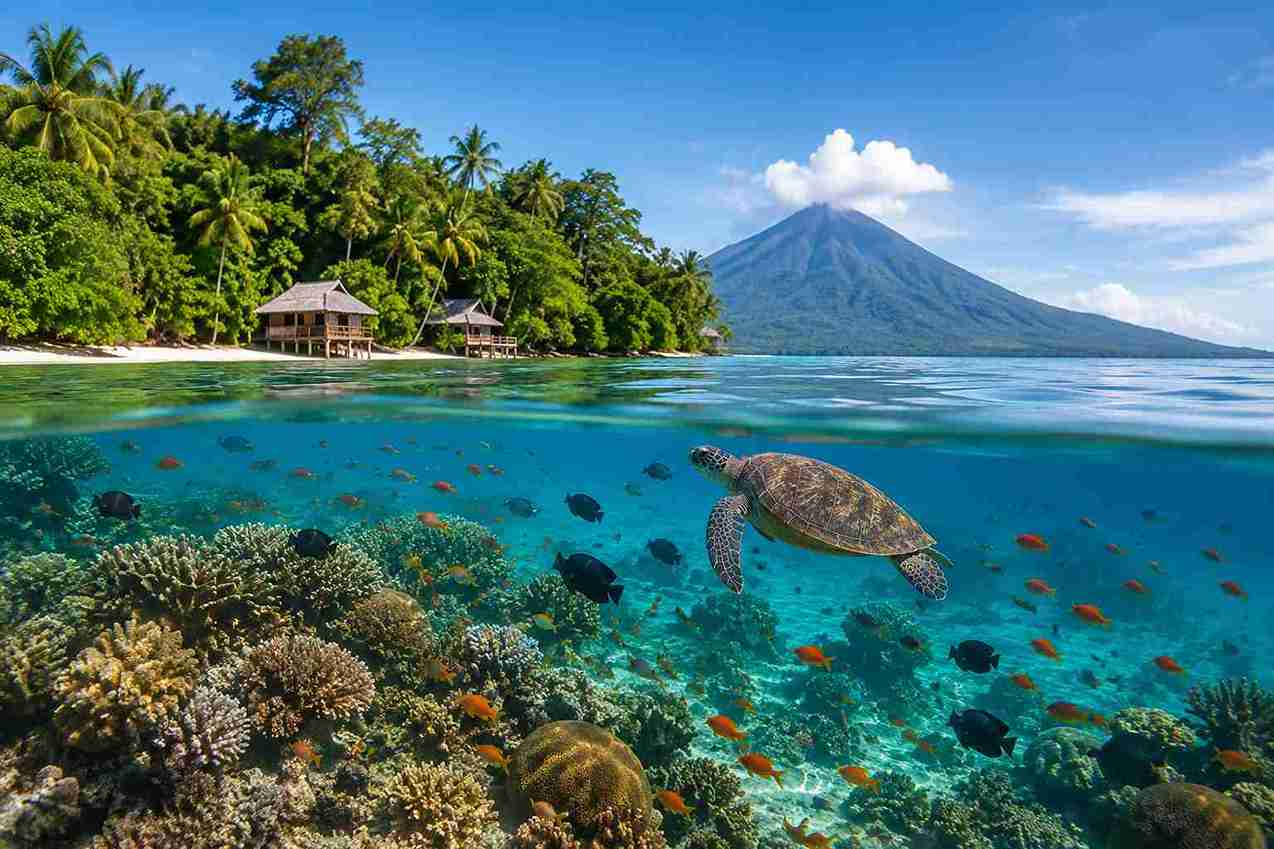
If you’re planning a trip to Indonesia and wondering whether Bunaken deserves a place alongside Bali, Komodo, or even Raja Ampat, the short answer is yes.
What makes Bunaken special is not luxury in the traditional sense. You won’t find beach clubs, designer boutiques, or endless nightlife. Instead, Bunaken offers something increasingly rare in Southeast Asia: world-class coral reefs, extraordinary marine biodiversity, easy accessibility, and a slower pace of travel that appeals to divers, snorkelers, couples, photographers, and nature-focused travelers.
Located just off the coast of Manado in North Sulawesi, Bunaken is one of Indonesia’s oldest marine parks and sits at the heart of the Coral Triangle, the most biodiverse marine region on Earth. The park protects five islands—Bunaken, Siladen, Manado Tua, Mantehage, and Nain—and is home to hundreds of coral species and thousands of fish species.
Is Bunaken Worth Visiting?
For the right traveler, absolutely.
Many visitors arrive expecting another version of Bali. Bunaken is not Bali.
There are no beach clubs. No traffic jams. No influencer crowds lining up for sunset photos.
Instead, visitors come for:
- Exceptional diving and snorkeling
- Sea turtle encounters
- Boutique island resorts
- Quiet beaches
- Nature and wildlife
- Easy access from Manado
One reason experienced divers often recommend Bunaken is its accessibility. Compared with destinations like Raja Ampat, which usually require additional flights and significantly higher travel costs, Bunaken can be reached within an hour of arriving in Manado. This makes it one of Indonesia’s easiest world-class marine destinations to visit.
What Makes Bunaken Different?
The answer lies underwater.
Bunaken is internationally famous for its dramatic vertical coral walls. In many places, reefs begin just a few meters below the surface before dropping into deep blue water. These walls are covered with hard corals, soft corals, giant sea fans, sponges, and marine life that attracts divers from around the world.
One of the most frequently mentioned highlights among divers is the sheer number of sea turtles.
A recent diver reviewing Bunaken on Reddit described seeing “over dozens of turtles” during dives at Lekuan, while another noted that Bunaken is “special in its own way” because of the abundance of turtles compared with many other destinations.
Even local dive operators note that seeing dozens of turtles during a single dive is not unusual in some areas of the marine park.
For travelers who dream of swimming alongside turtles in clear tropical water, Bunaken consistently delivers.
Where Is Bunaken?
Bunaken is located off the northern coast of Sulawesi, Indonesia, near the city of Manado.
The island is part of Bunaken National Park, a protected marine area covering approximately 890 square kilometers. More than 97% of the park consists of marine habitat.
For most international visitors, Manado serves as the gateway to Bunaken.
How to Get to Bunaken
The easiest route is:
- Fly to Sam Ratulangi International Airport (MDC) in Manado.
- Transfer to the harbor or your resort’s private jetty.
- Take a speedboat to Bunaken.
Most resorts arrange transfers directly from the airport, making the journey surprisingly straightforward.
Depending on weather and departure point, the boat journey typically takes between 30 and 45 minutes.
For luxury travelers, choosing a resort that includes airport and boat transfers significantly improves the overall experience.
Best Time to Visit Bunaken
Bunaken can be visited throughout the year, but the most favorable conditions generally occur between March and October.
During these months, travelers typically enjoy:
- Better underwater visibility
- Calmer sea conditions
- Excellent snorkeling
- Consistent diving opportunities
While travel remains possible during the rainy season, sea conditions can be less predictable.
Can Non-Divers Enjoy Bunaken?
Absolutely.
One of the biggest misconceptions about Bunaken is that it is only for scuba divers.
In reality, many visitors never dive at all.
Snorkeling in Bunaken is among the best in Indonesia. Several reef systems begin close to the surface, allowing snorkelers to experience healthy coral gardens, reef fish, and sea turtles without needing scuba certification. Some sites are even considered world-class snorkeling locations.
Beyond the water, visitors can enjoy:
- Sunset views over Manado Tua volcano
- Island walks
- Beach relaxation
- Dolphin sightings
- Nearby wildlife excursions in North Sulawesi
Is Bunaken Suitable for Luxury Travelers?
Yes, but with the right expectations.
Bunaken’s luxury is different from Bali’s luxury.
It is less about nightlife and more about exclusivity, privacy, nature, and personalized service.
Many visitors choose boutique resorts offering:
- Oceanfront villas
- Private terraces
- Diving and snorkeling programs
- Full-board dining
- Airport and boat transfers
- Small guest capacity
For couples, photographers, and travelers seeking a quieter Indonesian island experience, Bunaken often feels more authentic than many mainstream destinations.
Bunaken vs Raja Ampat
This is one of the most common questions among international travelers.
Choose Bunaken if you want:
- Easier logistics
- Lower travel costs
- Excellent diving and snorkeling
- Shorter travel times
- Boutique island resorts
Choose Raja Ampat if you want:
- Maximum biodiversity
- More remote exploration
- Luxury expedition-style travel
- A larger budget
For many travelers, Bunaken offers the best balance between accessibility and underwater quality.
Final Verdict
Bunaken is not Indonesia’s most famous destination.
It may not have Bali’s luxury villas or Komodo’s dragons.
But for travelers who value extraordinary marine life, crystal-clear water, sea turtles, boutique island resorts, and a slower pace of travel, Bunaken remains one of Indonesia’s most rewarding destinations.
If your idea of luxury is waking up to ocean views, spending the day exploring vibrant coral reefs, and ending the evening with a quiet sunset over the Sulawesi Sea, Bunaken is likely exactly what you’re looking for.
